The next cost is feed. The next project is growing our own.
Feed is the single biggest operating cost in aquaculture. The plan we’re designing: black-soldier-fly larvae, raised on local food waste, pelletised into low-cost protein feed — a loop we intend to close, hub by hub.
A concept in design — nothing here is operational yet. Every figure on this page is projected.
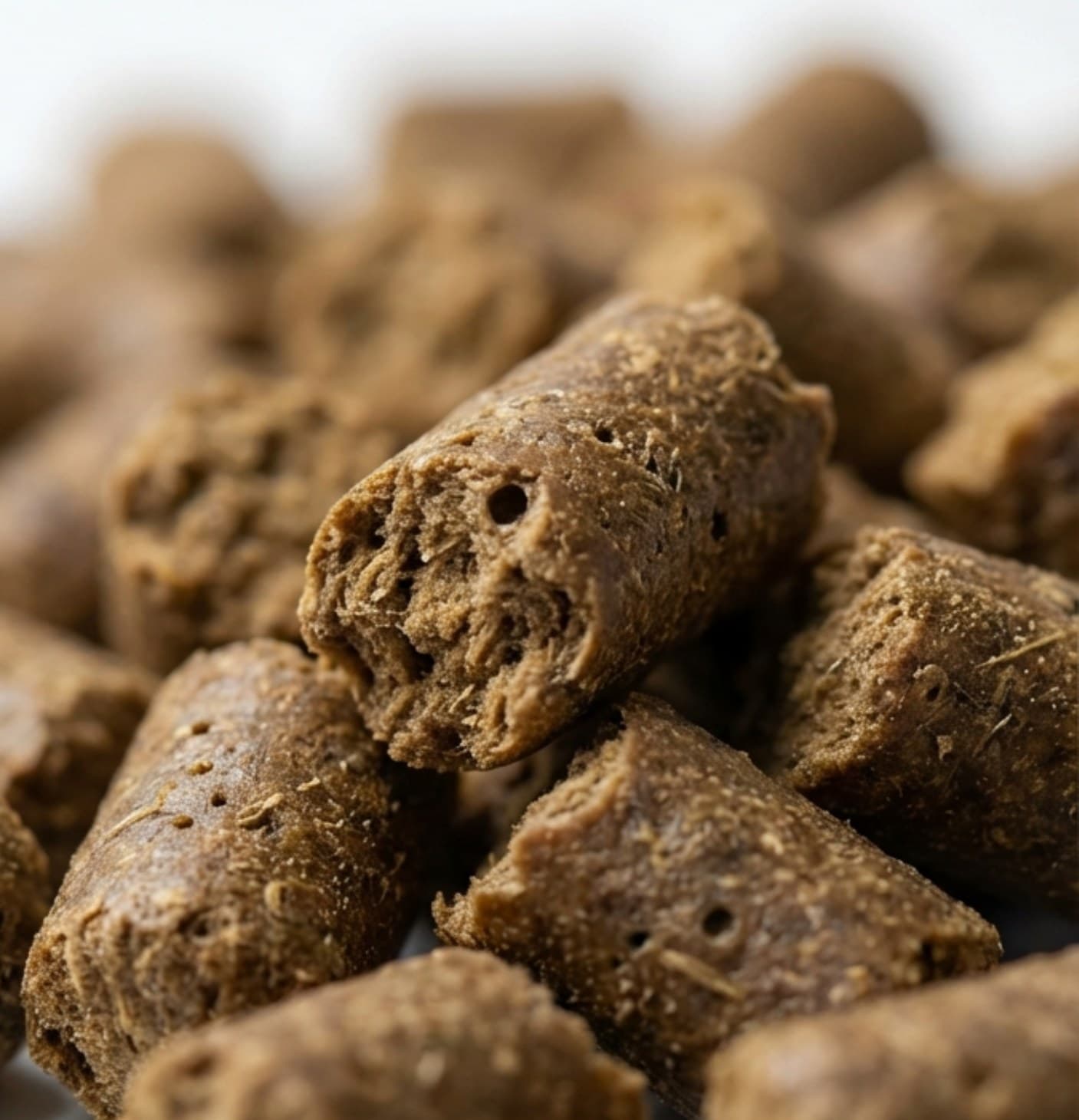
The fish we grow eat imported, volatile, long-hauled protein.
In aquaculture, feed is the biggest line on the balance sheet — and most of it is fishmeal and soy, priced on global markets and trucked in from far away. When those prices swing, the farmer’s margin swings with them.
Meanwhile, towns nearby pay to haul their organic waste away to landfill, where it rots and releases methane. Two problems, passing each other on the highway. The opportunity is to make them cancel out.
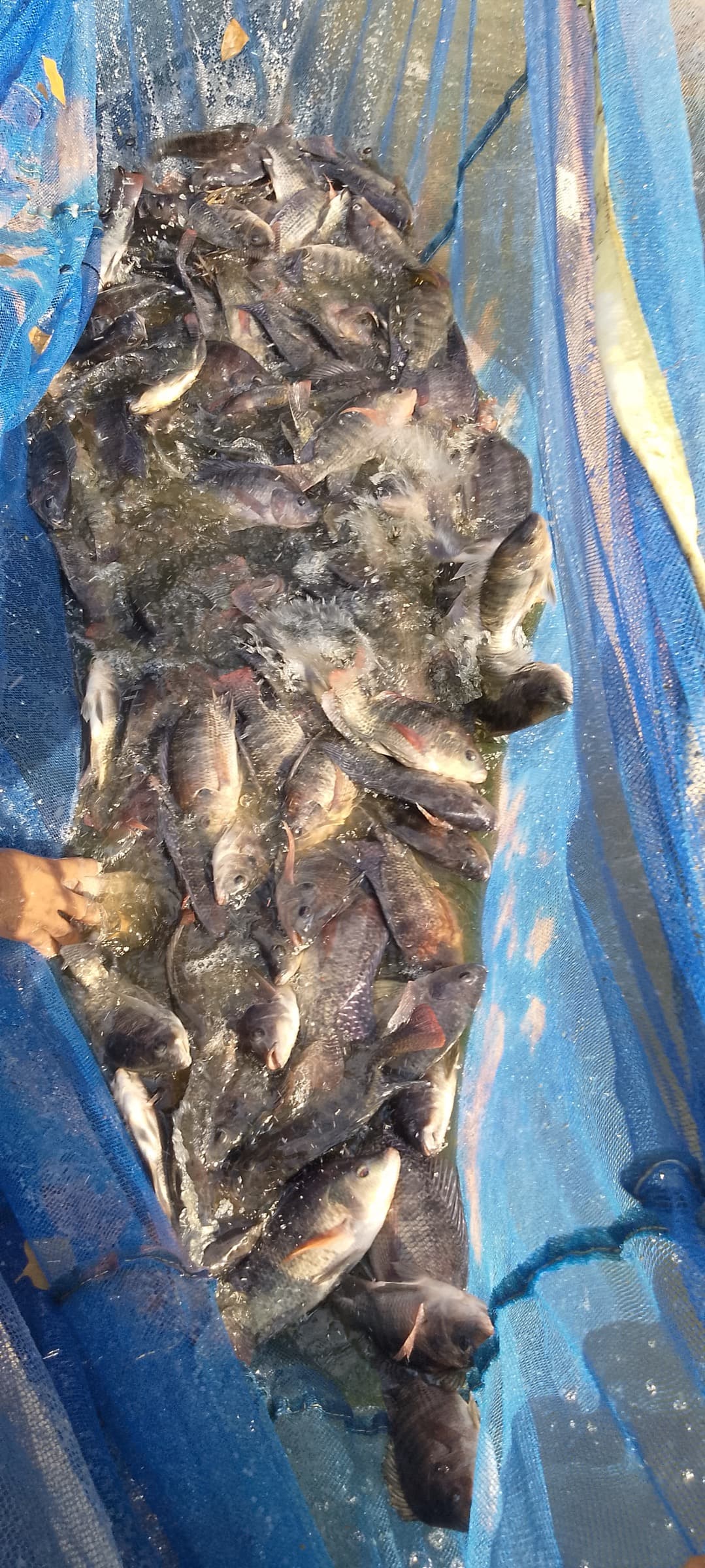
Turn the waste into the feed — where both already are.
A small, standard hub takes in local organic waste and lets black-soldier-fly larvae do the work — converting it into a protein-rich biomass, then drying and pressing it into feed. Here’s the loop we’re designing, with the throughput a single 3-acre hub would target.
- 01 · Local waste in500–850kg / day
Food & market waste, collected close to the hub.
- 02 · BSF bioconversion6growth cycles
Larvae eat the waste in climate-controlled beds.
- 03 · Harvest & pellet~50kg / hr
Dried and pressed — about 70% moisture is driven off.
- 04 · Protein feed out~71t / yr
Low-cost, high-protein pellets for local farms.
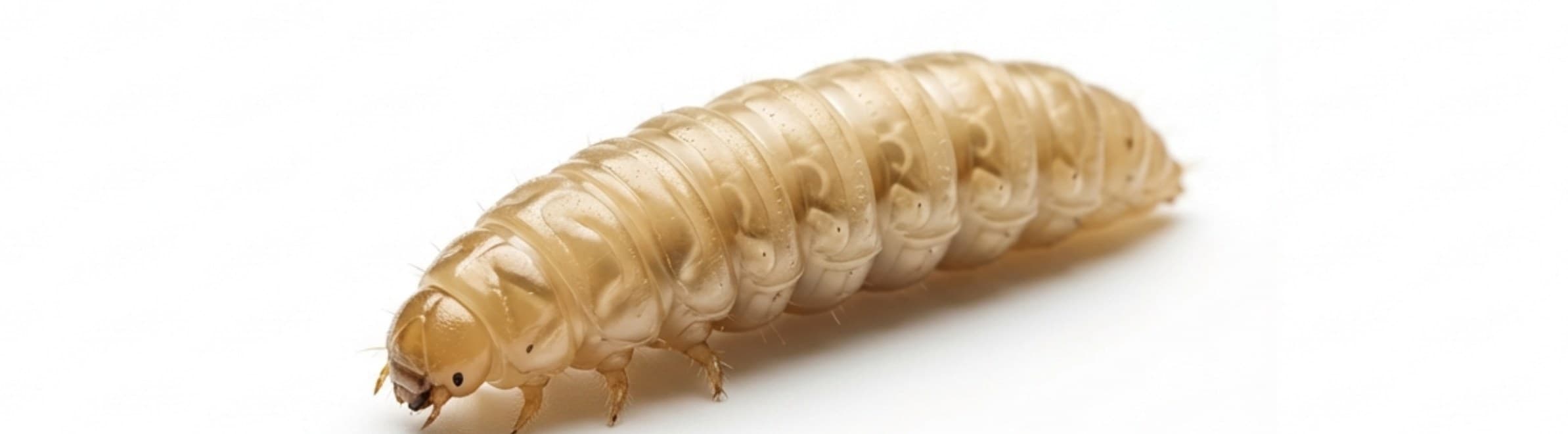
Concept render · the black soldier fly
Nature’s most efficient bio-converter.
The black soldier fly is not exotic — it’s a workhorse of modern feed. Its larvae eat organic waste and pack on protein fast, on a fraction of the water and land that conventional protein needs, with no long grow-out.
Figures describe the black soldier fly in general and are projected for our context, not measured from a HasiruAqua unit.
Decentralisation is the whole point.
The reason feed-from-waste often fails is logistics: one big central factory has to pull waste in and push feed out over long distances. Our proposal flips it — many small hubs, each running its own short loop, so waste and feed both stay in the district.
One central factory
Waste is hauled long distances in and feed hauled long distances out — transport eats the margin.
Many local micro-hubs
Each hub runs its own short loop — waste and feed both stay in the district. No long-haul, a hyper-local circular economy.
One repeatable 3-acre blueprint.
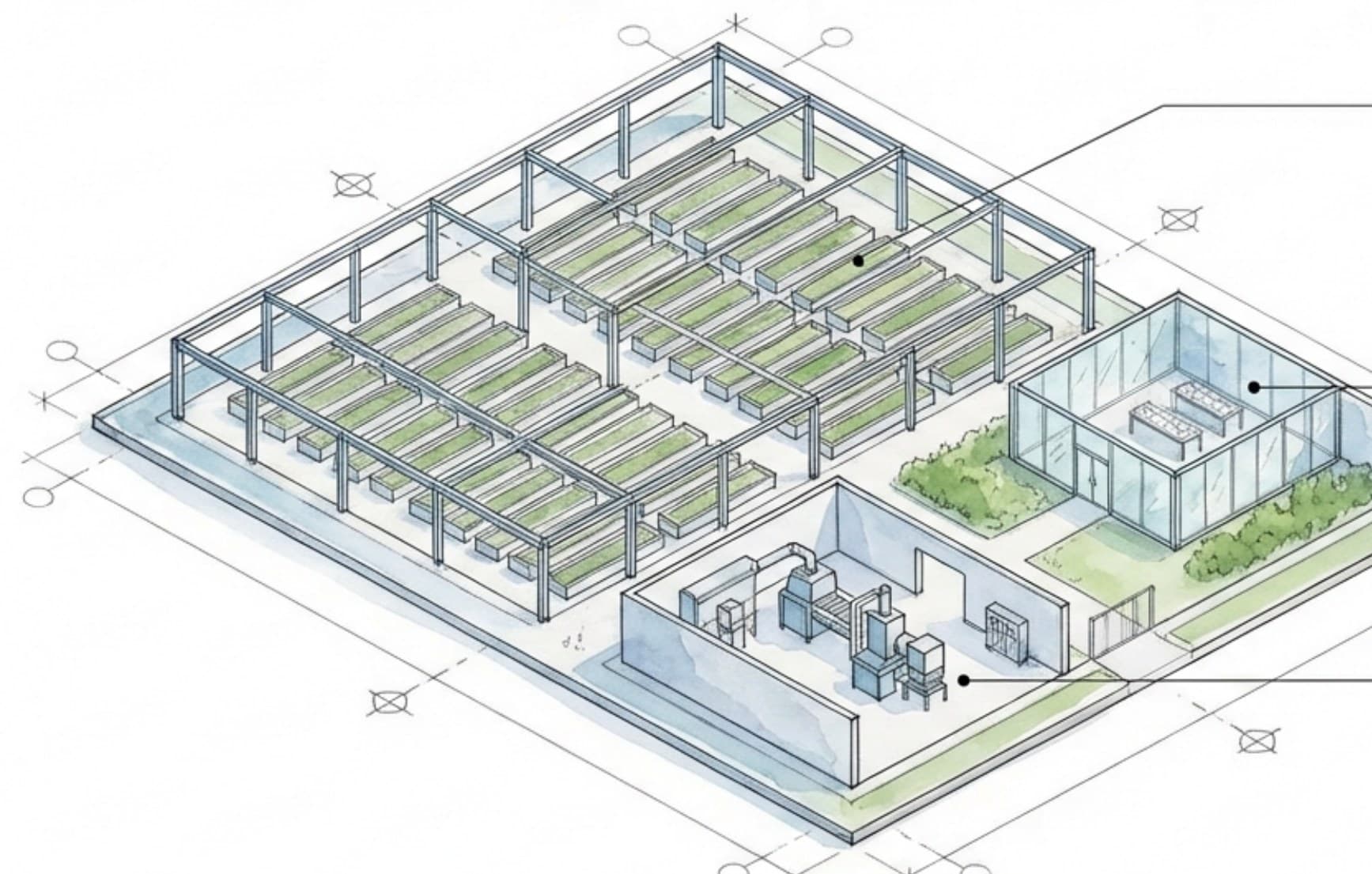
We’re designing the hub as a “cookie-cutter” asset — the same layout every time, so it can be built quickly and copied. The plan puts three things on one small plot:
- 01
Standardised growing beds
~250 beds (3′ × 12′) for larval density.
- 02
The queen room
A climate-controlled breeding zone.
- 03
On-site processing
Pelleting machinery, so feed ships dry.
A proposed first unit near Kanakapura would be the blueprint — proposed, not yet running.
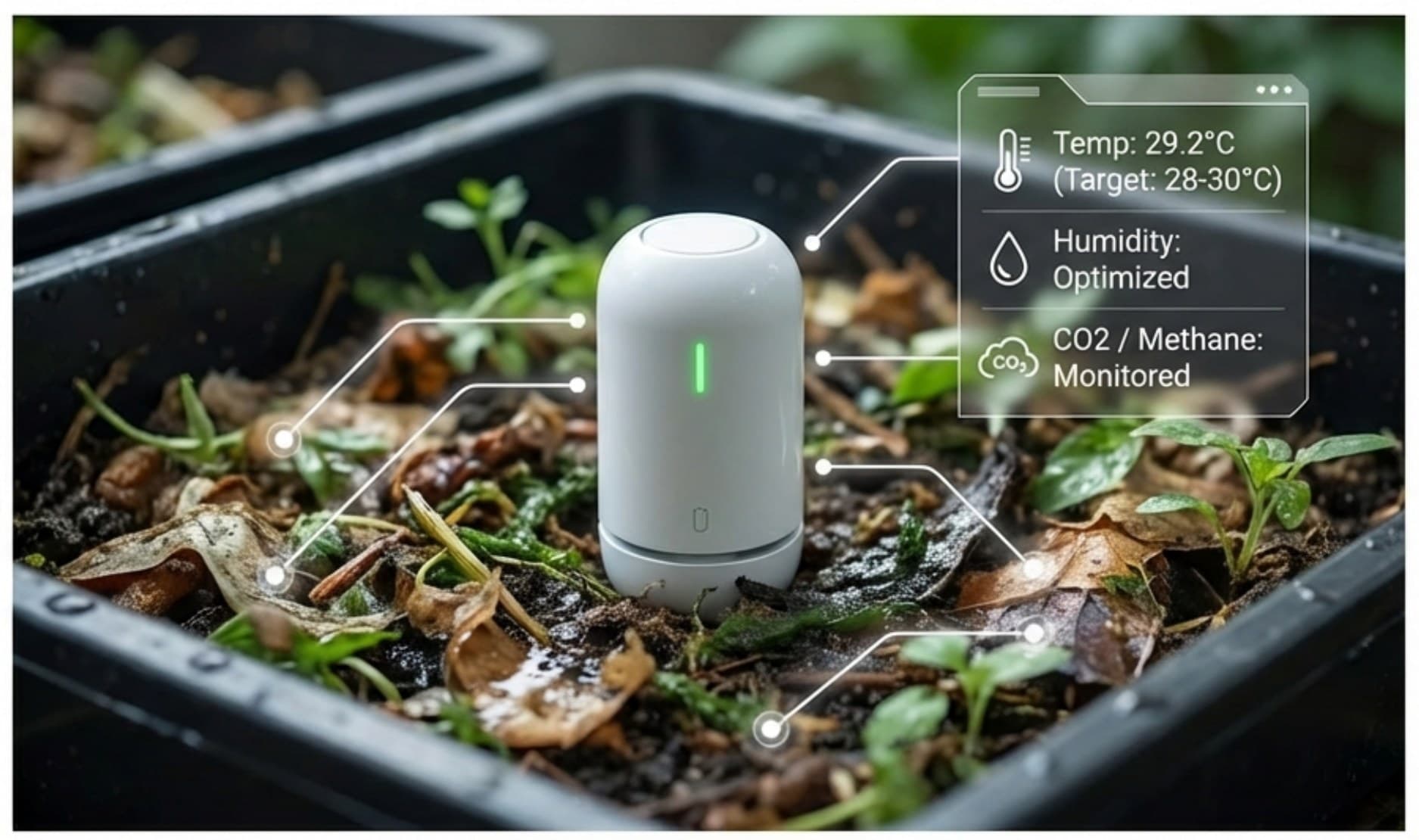
The same monitoring instinct, pointed at a compost bed.
BSF colonies are sensitive to heat, humidity and gases — a bad swing can collapse a batch. The plan is to run each hub on the same monitoring platform we already build for ponds, MeenDoctru, re-pointed at the beds to hold climate in the right band around the clock.
Pond monitoring is real and running today; the hub application is part of the proposed build.
Where this actually stands.
We’d rather under-claim than over-claim. So, plainly: the decentralised-protein infrastructure is a plan we’re designing — not an operating business — and every number here is a projection.
- Subsidised, HDPE-lined farm ponds, built and handed over.
- Full-stack fish farming — seed, feed, monitoring and market access.
- Real pond monitoring — MeenDoctru, in the field.
- The BSF micro-hubs and the waste-to-feed loop.
- A proposed first unit near Kanakapura.
- Every throughput, cost and market figure on this page.
The feed concept, answered.
What’s real, what’s proposed, and how it fits the rest of HasiruAqua.
Is the feed business operational?
No. The decentralised-protein / black-soldier-fly (BSF) infrastructure is a concept we're actively designing — not an operating business. What HasiruAqua runs today is farm ponds, fish farming and pond monitoring. Everything on this page about feed is proposed, and every number is a projection or a target, not a measured result.
What is black-soldier-fly (BSF) feed?
The black soldier fly is one of nature's most efficient bio-converters: its larvae eat organic waste and grow into a protein-rich biomass that can be dried and pressed into feed pellets. It's a well-established idea in aquaculture feed. Our proposal is to produce it locally, at the source of the waste, rather than trucking waste and feed long distances.
Where would the first hub be?
We're planning a proposed first unit near Kanakapura, Karnataka, as the 'cookie-cutter' blueprint a wider network could copy. To be clear: it is a proposed unit — not a running pilot. We'll say so plainly until it's built and producing.
How can I get involved?
If you're a farmer, the fastest thing today is a farm pond — start with a call. The feed concept is a design exercise, not something you can sign up for yet. When there's a first hub to talk about, it'll be on this page.
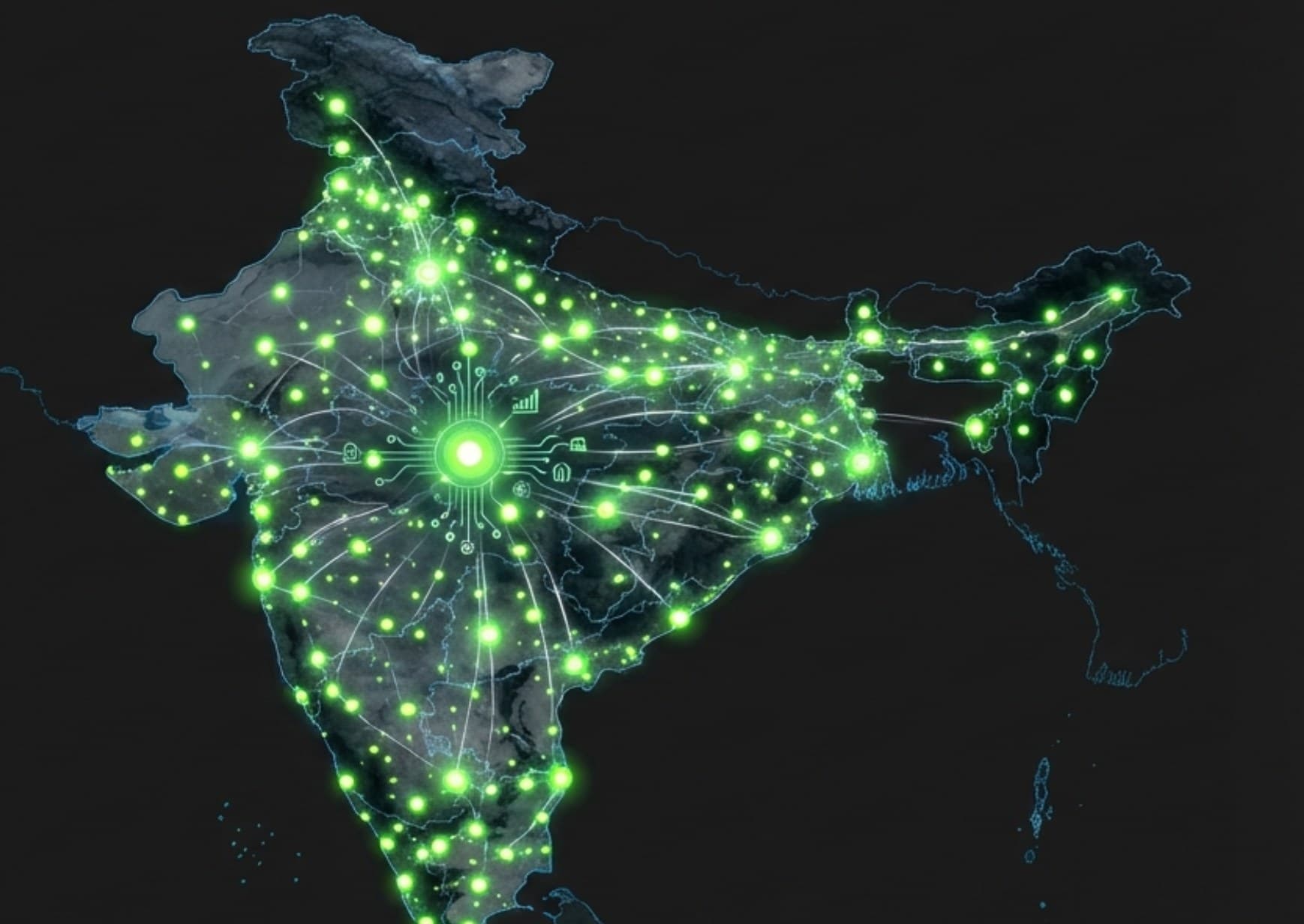
Concept · a targeted 1,000-hub network within five years — not today’s footprint
The next chapterBuilding this is what comes next.
The ponds, the fish and the monitoring are real and running. The feed network is the chapter we intend to build after them. Until a hub exists, this page stays what it says it is — a plan, openly described.