Your farm pond, up to 90% subsidised.
HasiruAqua builds you a lined farm pond that stores water through a bad monsoon — and we handle the subsidy paperwork, the construction and the handover, end to end.
Karnataka · Krishi Bhagya / Krishi Honda scheme · we’ll confirm your exact size and subsidy on a call.
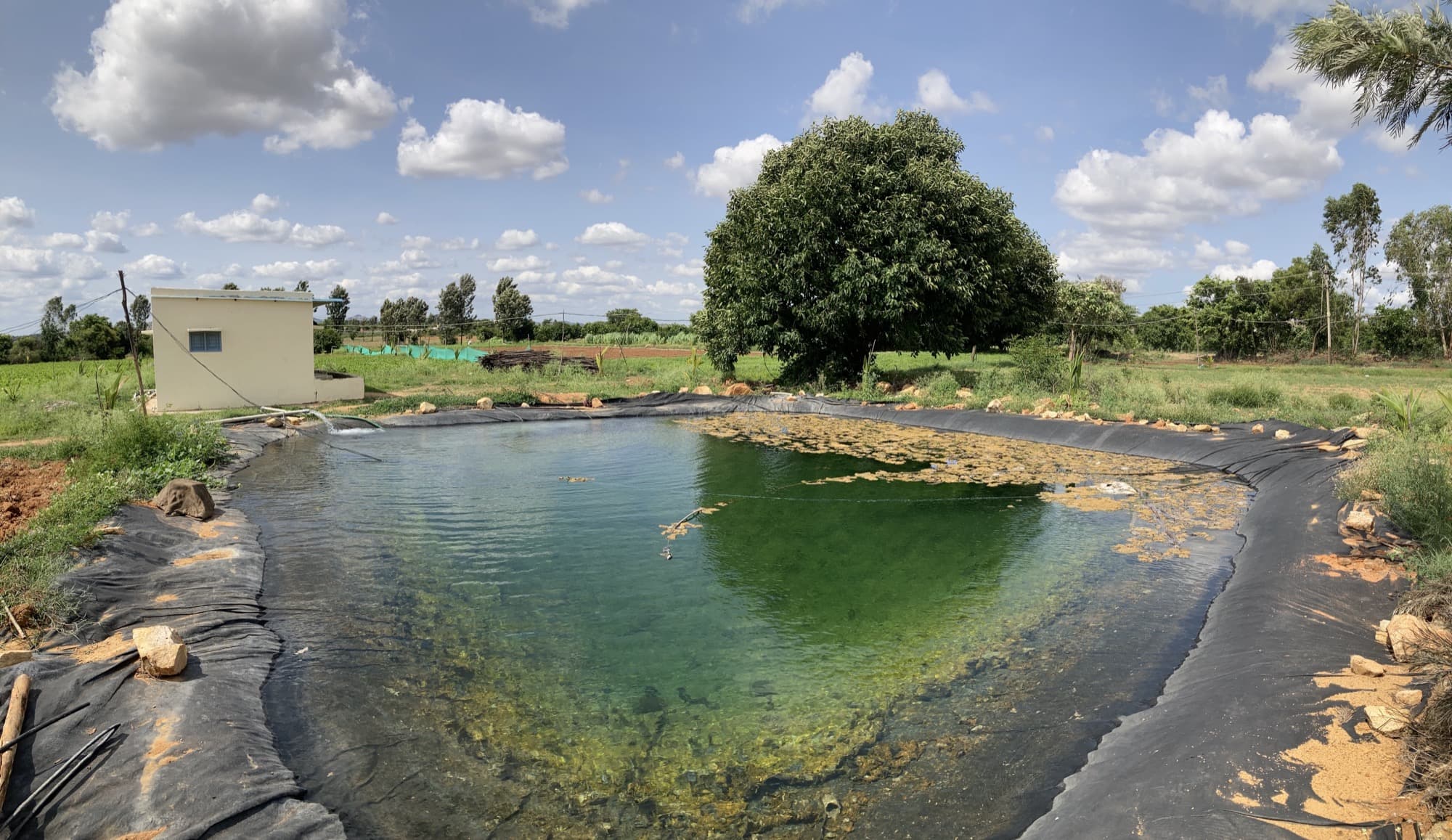
Krishi Honda means “farm pond”.
Krishi Honda (ಕೃಷಿ ಹೊಂಡ) is Kannada — krishi is farming, honda is a pond or tank. In English it is simply a farm pond: a dug, lined reservoir on your own land that catches and holds water, so the farm stops depending on the next rain. You will also see it spelt krushi honda, krushihonda or kushi honda. Same thing.
In Karnataka it is funded under the state’s Krishi Bhagya scheme, which is why the two names almost always appear together.
Water storage becomes insurance, not a luxury.
About half of India’s farmland waits on the rain. When the monsoon fails, so does the income and the nutrition that depend on it. A HasiruAqua farm pond turns that unreliable monsoon into water a farmer can count on — a durable asset on your own land.
Most farmers come to us wanting water security and don’t yet know a subsidy exists to fund it. We take you from “I want water” to a finished, lined, water-ready pond: we bring the demand, decode the subsidy, build to one standard, and hand it over.
Demand
You never chase a scheme — we bring the farmer and the plan.
Subsidy paperwork
Eligibility, filing, portal tracking, sanction — all handled.
Construction
A turnkey build to one repeatable, quality-checked spec.
Handover
Finished pond, self-cert verified, DBT closure filed for you.
Up to 90% of the cost — paid back after you build.
In Karnataka the relevant scheme is Krishi Bhagya / Krishi Honda — an individual, lined farm-pond subsidy. It covers up to 80% of eligible cost for general applicants and up to 90% for SC/ST applicants.
The money is disbursed by Direct Benefit Transfer (DBT) after the pond is completed and verified — so it lowers your effective cost rather than gating the build.
The part most farmers are surprised by: the percentage applies to the scheme’s eligible cost, not to your quote. For the standard 12 × 12 × 3 m scheme unit that eligible cost is about ₹1.75 lakh, so the grant lands near ₹70,000 at the general rate and ₹80,000 for SC/ST applicants — and it does not scale with pond size. Build bigger and the difference is yours.
The honest arithmetic: your cost ≈ your quote − about ₹70–80,000. We put your exact figures in writing before you commit to anything.
Scheme year 2026–27. Rates last checked September 2026. Karnataka revises caps and windows annually, so we confirm your current entitlement first.
Confirm before you commit
Scheme rates, caps and windows change every year, and eligible cost depends on your pond. We’ll confirm your exact size, subsidy rate and net cost on a quick call — no guesswork.
It isn’t only the pond
The subsidy covers the earthwork and the lining — but also the kit that makes a pond actually usable: lift pumps, diesel motors, the tarpaulin cover and nets. The specification also requires an inlet and outlet and a silt trap, so the pond fills cleanly and doesn’t silt up in its first monsoon.
Most farmers don’t know the extras are covered. We scope all of it into one quote, rather than leaving you to find out later that the pump wasn’t in the number.
Krishi Honda size chart, in feet and in metres.
There is no single fixed size — a pond is sized to your land, your water need and your budget. The scheme sets a minimum of 9 × 9 × 3 m (about 30 × 30 × 10 ft); above that you build to your plot. The scheme is written in metres; farmers think in feet. Here it is both ways.
Schematic of the standard 100 × 100 × 10 ft unit — about 0.23 acre of water surface. Representative and not to scale; we confirm your exact dimensions on a site visit.
| Pond size (ft) | Size (m) | Water surface | Approx. water held |
|---|---|---|---|
| 30 × 30 × 10scheme minimum | 9 × 9 × 3 | 81 m² · 0.02 acre | ~1.2 lakh litres |
| 39 × 39 × 10 | 12 × 12 × 3 | 144 m² · 0.04 acre | ~2.5 lakh litres |
| 49 × 49 × 10 | 15 × 15 × 3 | 225 m² · 0.06 acre | ~4.4 lakh litres |
| 59 × 59 × 10 | 18 × 18 × 3 | 324 m² · 0.08 acre | ~6.8 lakh litres |
| 69 × 69 × 10 | 21 × 21 × 3 | 441 m² · 0.11 acre | ~9.8 lakh litres |
| 82 × 82 × 10 | 25 × 25 × 3 | 625 m² · 0.15 acre | ~14.6 lakh litres |
| 98 × 98 × 10our standard | 30 × 30 × 3 | 900 m² · 0.22 acre | ~22 lakh litres |
Our planning default is the largest unit — about 100 × 100 × 10 ft, roughly a quarter-acre of water surface, holding around 22 lakh litres when full.
Two things worth knowing before you read any size chart. Dimensions are measured at the top of the bund, not at the water line. And because the sides slope inward, a pond holds well under the simple length × width × depth figure.
Minimum and maximum dimensions are set by the current scheme rules and change from year to year — treat this chart as a planning guide, not a quote. Figures last checked against the 2026–27 scheme year.
Exact size, subsidy rate and your net cost all depend on your plot and this year’s scheme. We’ll confirm your exact size and subsidy on a call — it takes a few minutes.
Call now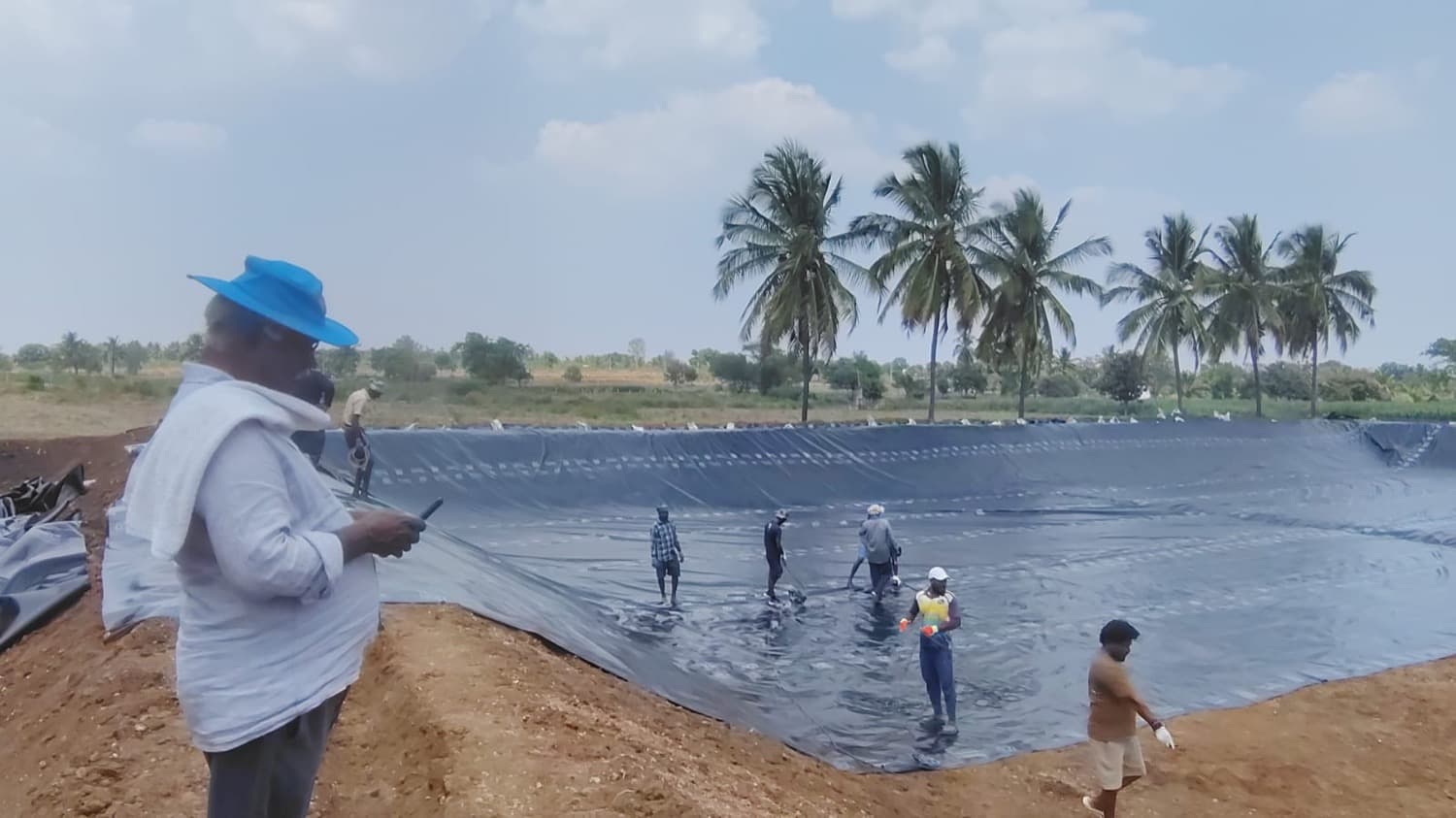
The tarpaulin, and what “HDPE lining” actually means.
Farmers call it the tarpaulin — or tarpal. The scheme paperwork calls it an HDPE geomembrane or a polythene lining sheet. Same object, same job: a tough plastic sheet rolled across the bed and up the slopes, seamed, and locked into an anchor trench around the top so it can’t slip.
In most farm soils an unlined pond leaks — water seeps back into the ground within days. The tarpaulin is what makes the pond actually hold water, which is why a lined pond is what the subsidy requires in the first place.
What grade of tarpaulin?
Liner is sold by GSM (grams per square metre) or by micron thickness. Karnataka’s scheme funds lining at 250 or 420 GSM, and those are the grades we build to unless your site calls for something heavier — a pond you intend to stock and net through a full season is worth the higher grade.
How much does a pond need?
More than the pond’s footprint — the sheet has to cover the sloped sides and turn over into the anchor trench. As a planning rule, liner area ≈ 1.25 × the water-surface area. A 98 × 98 ft pond (900 m² of surface) takes roughly 1,100 m² of sheet.
We set the grade to your soil and the current scheme specification, and the exact sheet size and its cost are itemised in your written quote before any work starts.
How the Krishi Bhagya application actually works.
Filing it is the part we take on — but it is your name on the application, so you should know what happens in it.
- 01
Are you eligible?
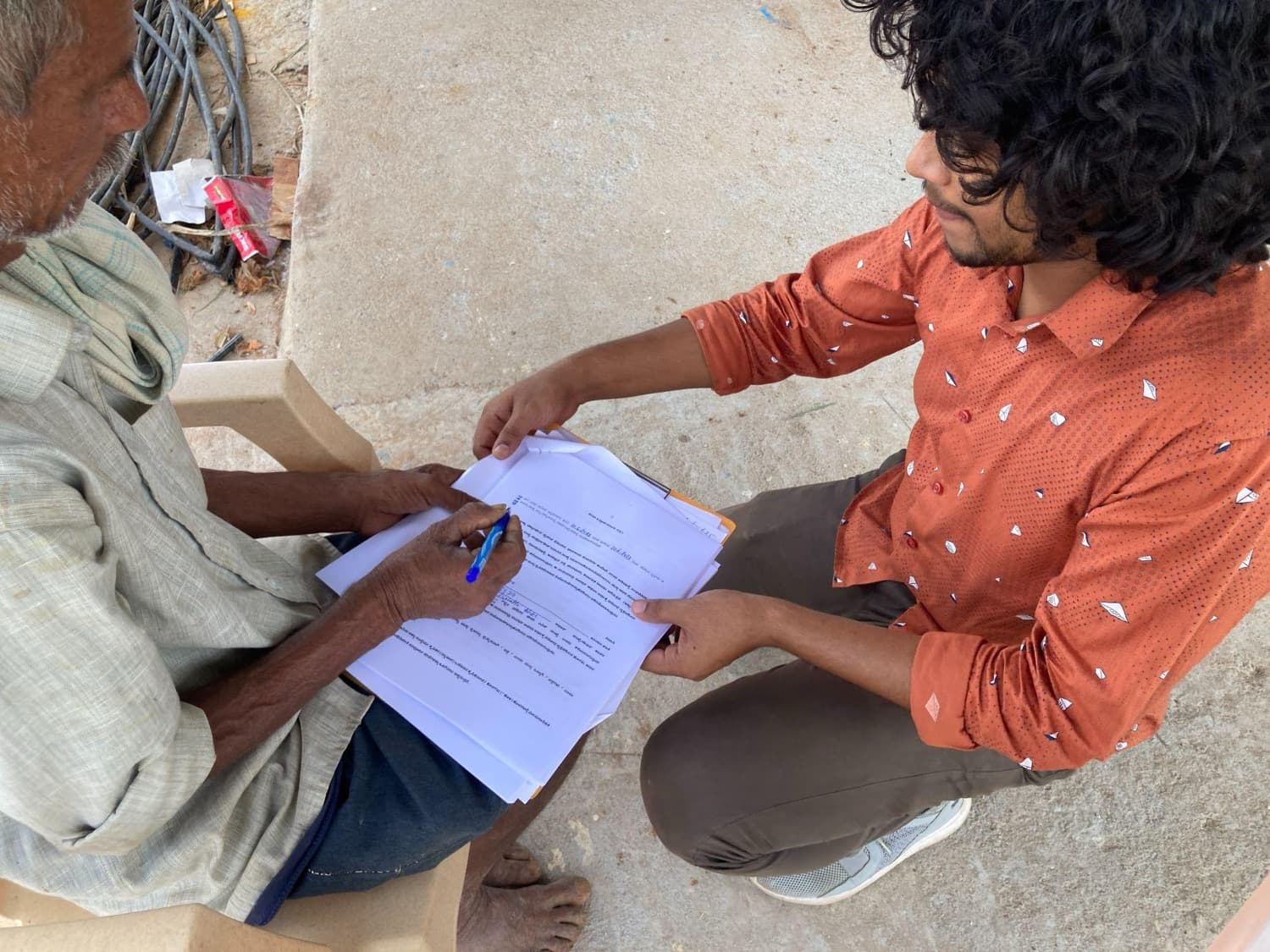
Farmers holding 1 acre or more. A pump-set or drip subsidy in the last three years doesn't rule out a pond — the exclusion applies to those components.
- 02
Farmer registration
Your land has to be on record against your FRUITS ID, Karnataka's farmer registration system. If you don't have one, that's where we start.
- 03
Apply through your RSK
Applications go through the Raitha Samparka Kendra for your hobli, inside the season's window. Windows open and close — missing one costs a year.
- 04
Documents
RTC / pahani for the land, Aadhaar, a bank passbook for the DBT account, and a caste certificate if you're applying at the SC/ST rate.
- 05
Sanction first, then build
Work starts after sanction comes through. A pond you have already dug generally cannot be claimed — the most expensive mistake we see.
- 06
Verification, then DBT
The finished pond is measured against the sanctioned spec, the completion paperwork is filed, and the grant reaches your bank by Direct Benefit Transfer.
We run all six with you. What we need from you is the land, the documents, and a phone call.
From a phone call to a filled pond.
One repeatable process, seven steps. We own the farmer, the subsidy and the handover; a turnkey partner owns the build.
- 01
Enquiry
HasiruAquaIt starts with a phone call. We capture your location, landholding and water situation, and check rough eligibility before anyone drives out.
- 02
Farm visit & feasibility
HasiruAquaWe visit and assess soil, water table, terrain, catchment and machine access, and decide whether — and where — a pond makes sense.
- 03
Design & quote
HasiruAquaWe fix the size, depth, side-slopes and liner spec, then give you a clear written quote: total cost, your expected subsidy and your real net.
- 04
Subsidy sanction
HasiruAquaWe prepare and file your Krishi Bhagya / Krishi Honda application, track it through the state portal and secure the sanction. This is the part farmers can't do alone.
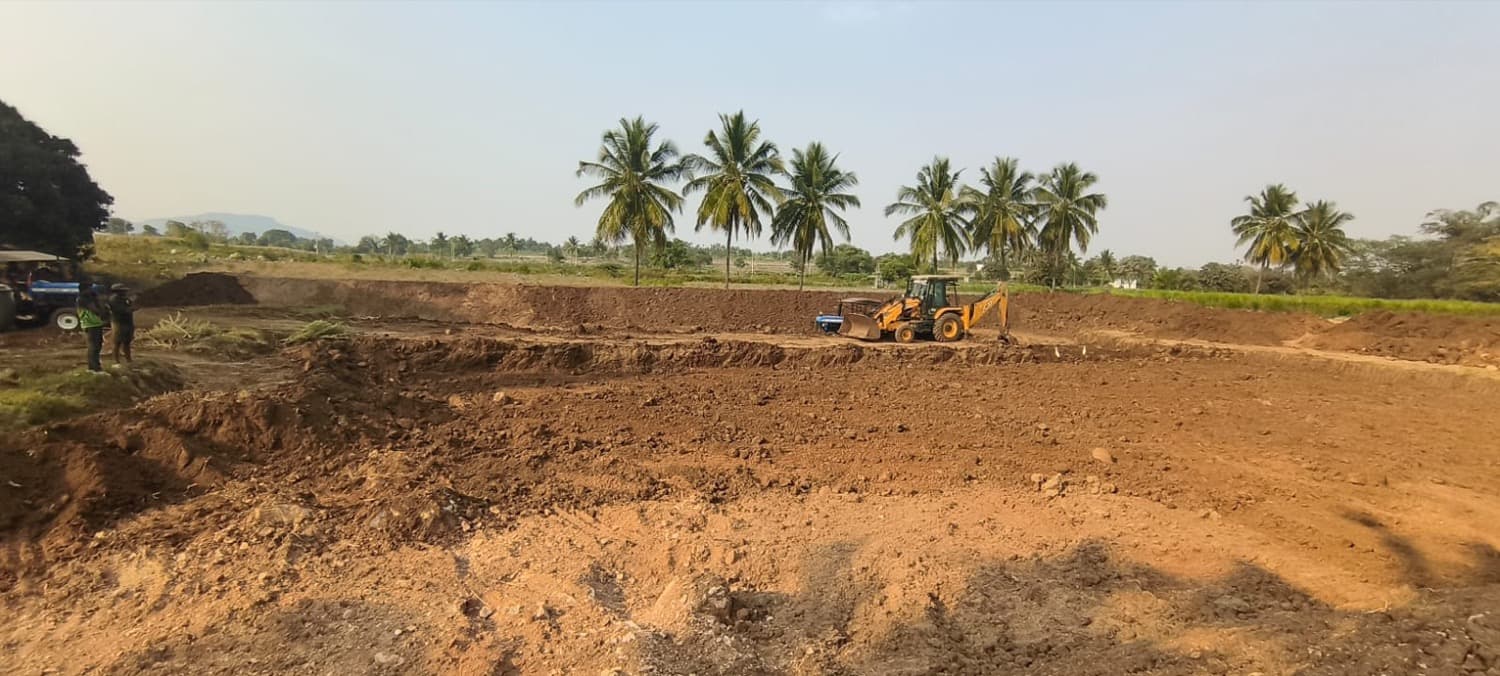 05
05Construction
Build partnerA turnkey crew sets out the pond, excavates to depth and slope, forms and compacts the bunds, adds water works, then lays and anchors the HDPE liner.
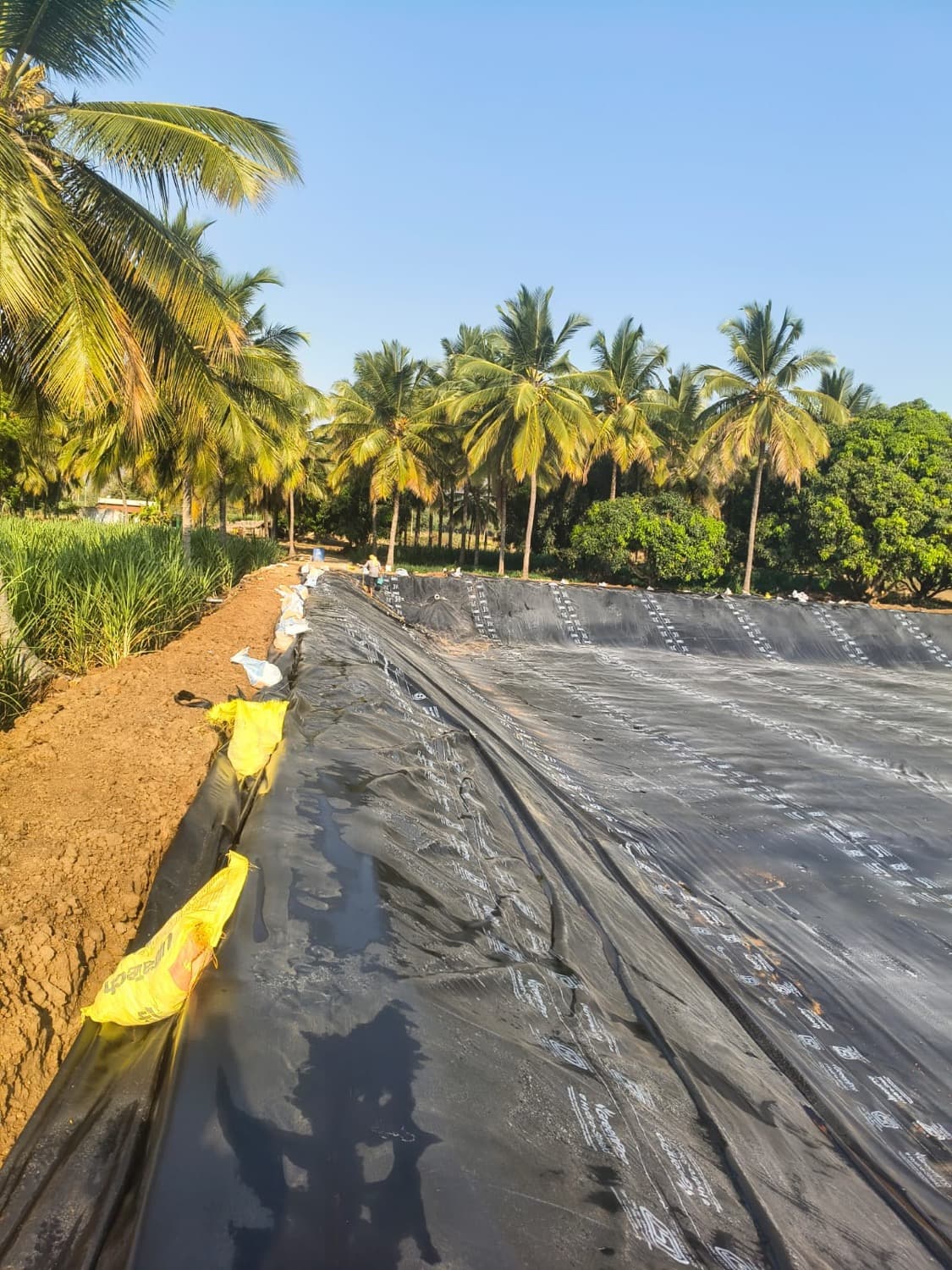 06
06Quality check
Partner → HasiruAquaThe pond is self-certified with photos and measurements — dimensions, depth, liner coverage and anchoring — and we verify it against the agreed spec.
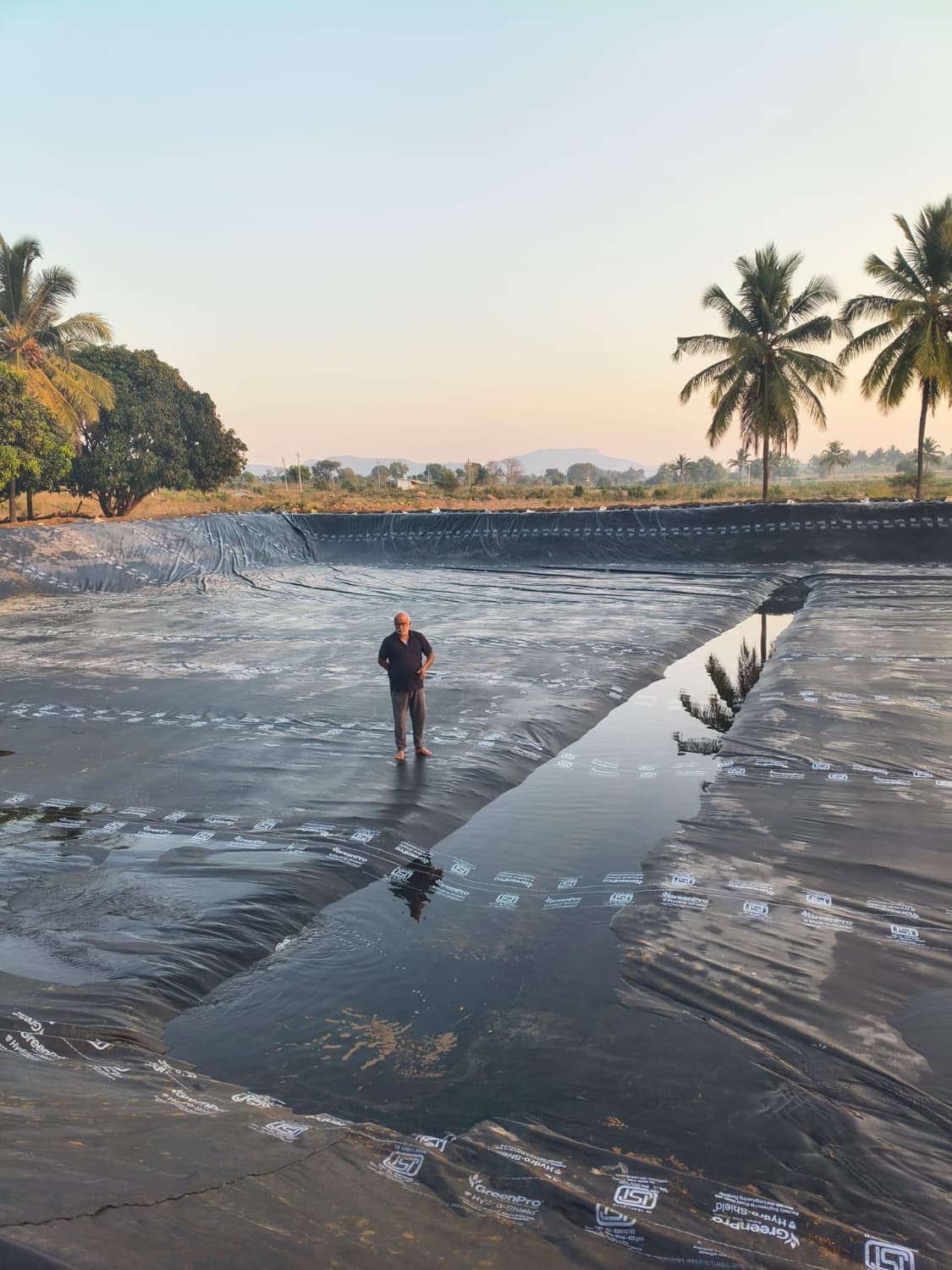 07
07Handover & DBT closure
HasiruAquaWe hand over the finished pond and file the subsidy-completion paperwork so the DBT disbursement reaches your account. The project closes; the water stays.
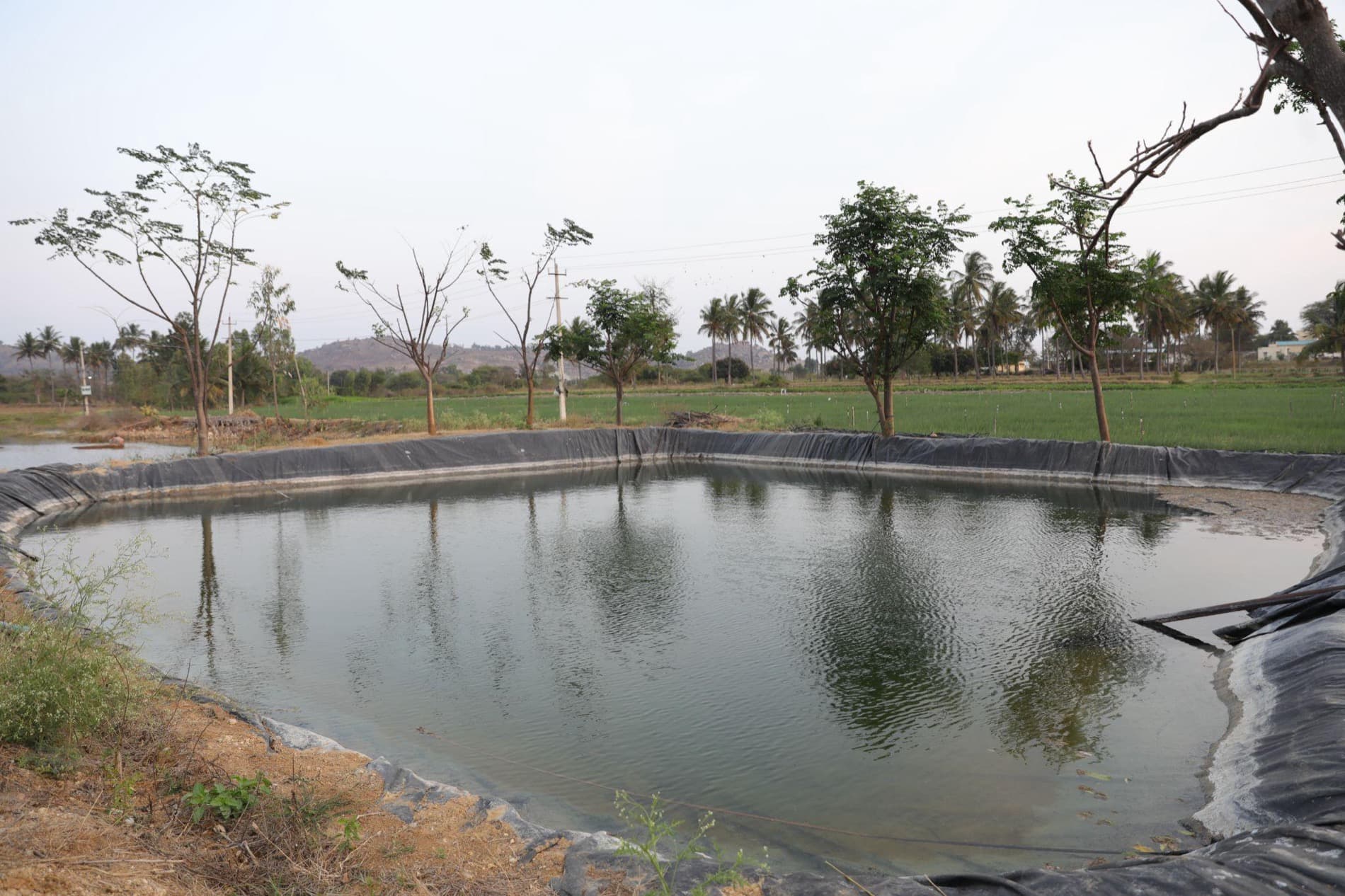
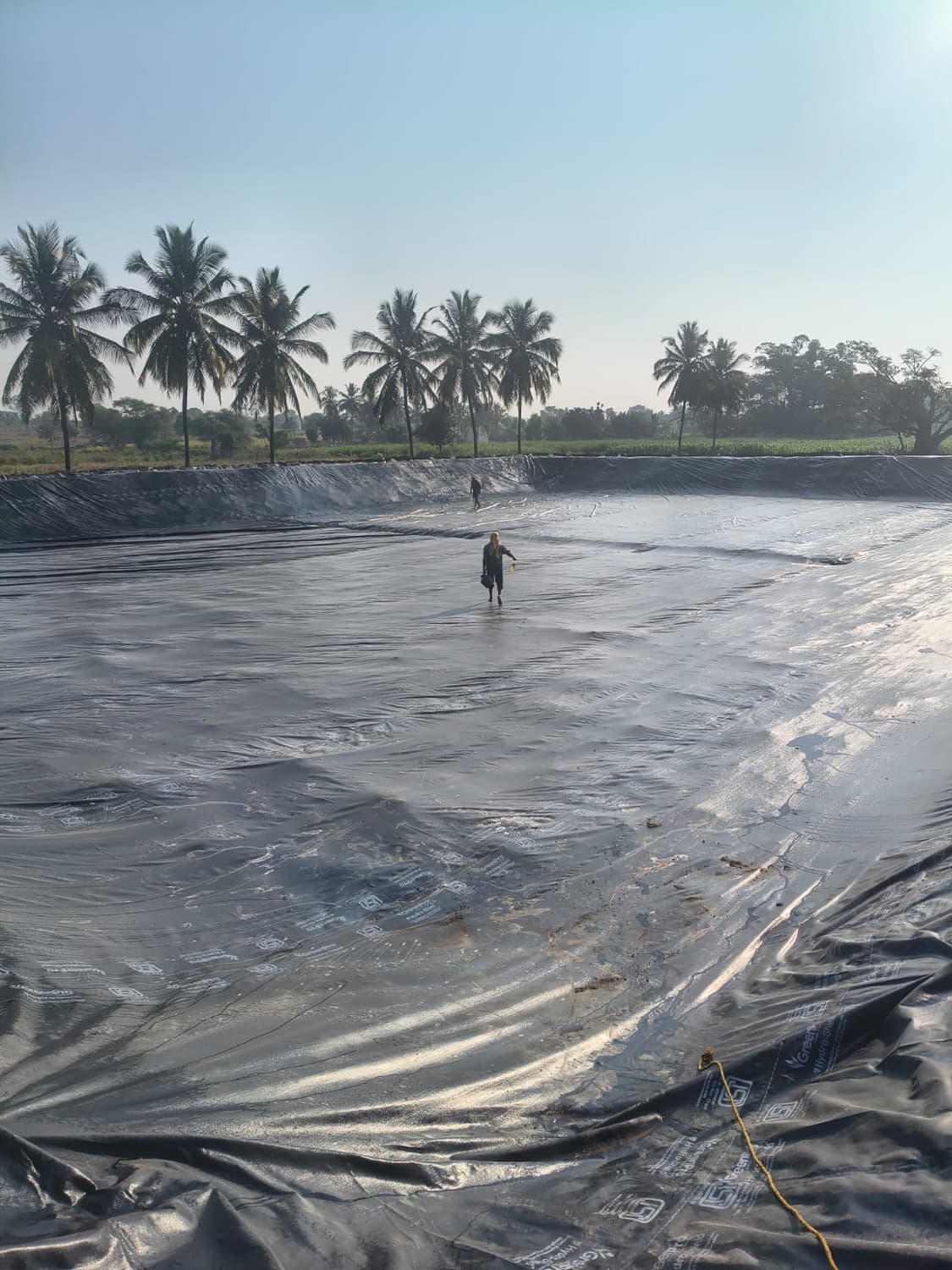
One pond, start to finish.
Not a render — a real HasiruAqua pond, dug, lined and filling. This is the standard every pond is built to.
Krishi Honda, answered.
The real questions farmers ask us. Still unsure? A two-minute call clears it up.
What size is a Krishi Honda pond (in feet)?
There is no single fixed size — a pond is sized to your land, your water need and your budget. As a planning default we use a standard unit of about 100 × 100 × 10 ft (roughly 30 × 30 × 3 m) — about a quarter-acre of water surface, holding roughly 22 lakh litres. Standard scheme units run from 9 × 9 × 3 m up to that size; the full chart in feet and metres is above. Schemes set a minimum, so we confirm the exact dimensions that fit your plot and the current rules on a site visit.
How much subsidy can I get?
Under Karnataka's Krishi Bhagya / Krishi Honda scheme, the lined farm-pond subsidy is up to 80% of eligible cost for general applicants and up to 90% for SC/ST applicants. It is paid by Direct Benefit Transfer (DBT) into your bank account after the pond is completed and verified — not upfront. Scheme amounts and windows change year to year, so we confirm your current eligibility before you commit.
What does it cost, and what will I pay after subsidy?
A standard pond is roughly ₹3–4 lakh all-in, built to spec. After the scheme subsidy is reimbursed, a farmer's effective out-of-pocket is commonly around ₹2 lakh — but this depends on your pond size, your site and the current subsidy rate. Before any work starts we give you a clear written quote showing total cost, expected subsidy and your net.
What is the tarpaulin / liner?
The pond is lined with an HDPE geomembrane — a tough plastic liner rolled across the bed and up the sides and locked into an anchor trench around the top. It stops water seeping away into the soil, which is what lets the pond hold water reliably. A lined pond is also what the subsidy scheme requires. We set the liner grade to your site and the scheme specification.
How do I apply for the subsidy?
You don't navigate the portal alone — that is the part we handle. We check your eligibility, prepare and file the Krishi Bhagya / Krishi Honda application, track it through the state system and secure the sanction, then file the completion paperwork so the DBT payment reaches your account. You start with a phone call; we do the rest.
How long does it take?
Engagement to an agreed quote is usually a matter of days. Subsidy sanction is state-dependent and can take a few weeks. The construction itself — dig, shape, line and finish — is typically about one to two weeks depending on pond size. Timelines vary by site and by how the scheme portal is moving, which we walk you through on the call.
What does Krishi Honda mean in English?
Krishi Honda (ಕೃಷಿ ಹೊಂಡ) is Kannada for farm pond — krishi is farming, honda is a pond or tank. It means a dug, lined water-storage pond on a farmer's own land, built to catch and hold water so the farm isn't waiting on the next rain. You'll also see it spelt krushi honda or krushihonda; it's the same thing.
Is Krishi Honda the same as Krishi Bhagya?
They're related but not the same: one is the thing, the other is the scheme that pays for it. Krishi Honda is the farm pond itself. Krishi Bhagya is the Karnataka government programme that subsidises it, alongside other dryland-farming works like polyhouses, shadenets and pump sets. When people say 'the Krishi Honda scheme', they mean the farm-pond component of Krishi Bhagya.
How much water does a Krishi Honda hold?
It depends on the size. Our standard 100 × 100 × 10 ft unit (30 × 30 × 3 m) holds roughly 22 lakh litres when full. The smaller standard units hold proportionally less — a 15 × 15 × 3 m pond is about 4.4 lakh litres. Because the sides slope inward, a pond always holds less than length × width × depth would suggest; the size chart above gives the realistic figure for each standard size.
Am I eligible for the Krishi Honda subsidy?
The scheme is for farmers holding 1 acre or more, with the land registered against your FRUITS ID and a bank account in your own name for the DBT. Applying at the SC/ST rate needs a caste certificate. If you've taken a subsidy for a pump set or drip irrigation in the last three years, that doesn't rule out a farm pond — the exclusion applies to those components. One thing that does matter: work has to start after sanction, because a pond you've already dug generally can't be claimed.
Ready when you are. Start with a call.
Tell us where your land is and what you’re trying to solve. We’ll confirm your exact pond size, your subsidy and your net cost — and if it makes sense, book a farm visit.
Prefer to write? Send your details and we’ll call you back.